Room by Room: Furniture Layouts That Make Any Space Feel Like It Was Designed Just for You
Furniture placement is one of the most underestimated forces in interior design. A room furnished with beautiful pieces can still feel awkward, cramped, or disconnected if the layout does not account for traffic flow, scale, and the human experience of moving through and living in that space. Conversely, a thoughtfully arranged room—even one furnished modestly—can feel welcoming, functional, and distinctly intentional.
The following scenarios represent some of the most common spatial challenges American homeowners face, along with the layout strategies and furniture selections that address them most effectively.
1. The Open-Concept Living and Dining Area
The Challenge: Large, undivided spaces offer freedom but can feel undefined or cavernous without deliberate structure.
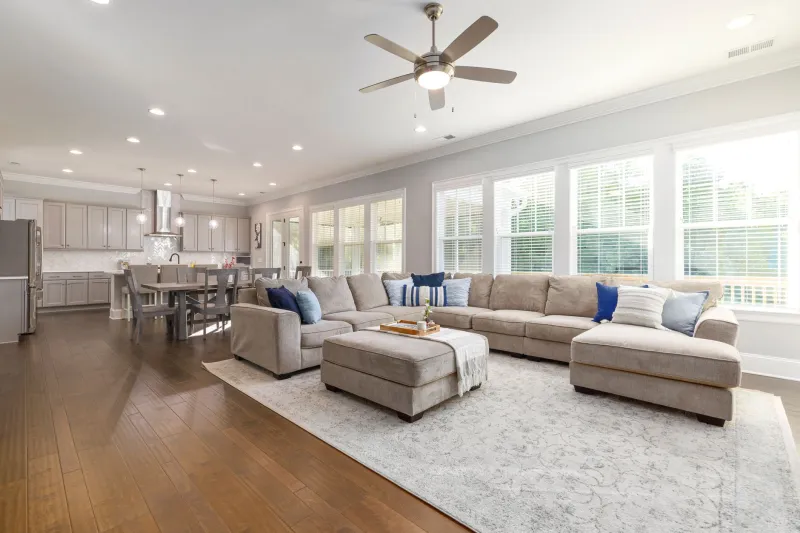
The Strategy: Use furniture groupings to establish distinct zones within the shared footprint. A large area rug anchors the seating arrangement and visually separates the living area from the dining space. Position a sectional or a sofa-and-loveseat combination facing inward toward a coffee table, keeping the backs of the pieces aligned with—rather than pushed against—the walls. This creates a conversation-friendly island that defines the living zone without enclosing it.
For the dining area, a rectangular table with seating for six to eight provides both function and visual weight. Pendant lighting above the table reinforces the zone's identity even in the absence of walls.
Key Pieces: A large sectional in a performance fabric, a generously sized rectangular dining table, upholstered dining chairs, and a substantial area rug in a complementary neutral.
2. The Narrow Living Room
The Challenge: Long, narrow rooms are common in older American homes and apartment buildings, and they resist conventional furniture arrangements.
The Strategy: Resist the temptation to line furniture along the walls. Instead, float pieces perpendicular to the room's length to break up the tunnel effect. A sofa positioned with its back to the entry creates an intimate seating area at one end, while a pair of accent chairs and a side table define a secondary conversation or reading nook at the other.
Vertical elements—tall bookshelves, floor lamps, or an upright cabinet—draw the eye upward and counteract the room's horizontal emphasis.
Key Pieces: A mid-depth sofa (no more than 36 inches deep), two armless accent chairs, a narrow console table, and a tall bookcase or display cabinet.
3. The Primary Bedroom Retreat
The Challenge: Many primary bedrooms are either too large—feeling impersonal—or too small to accommodate the furniture a restful space demands.
The Strategy: In either case, the bed should be the undisputed focal point. In larger rooms, position the bed on the wall opposite the entry, centered between nightstands of equal height and proportion. A bench at the foot of the bed adds functionality while reinforcing the room's sense of intention.
In smaller bedrooms, choose a platform bed with built-in storage to eliminate the need for a separate dresser. Wall-mounted nightstands free up floor space and contribute to an airier feel.
Key Pieces: An upholstered platform bed, matching nightstands, a low-profile dresser or chest, and a bench or storage ottoman for the foot of the bed.
4. The Home Office That Actually Works
The Challenge: As remote and hybrid work have become fixtures of American professional life, the home office has evolved from a luxury to a necessity—yet many are furnished as afterthoughts.
The Strategy: Treat the home office with the same intentionality as any other room. Position the desk to face either a window or the door—both options reduce eye strain and create a sense of engagement with the space. A dedicated task chair with lumbar support is non-negotiable for anyone spending extended hours at a desk.
Storage is equally important. A combination of open shelving for frequently accessed materials and closed cabinetry for everything else keeps the visual environment calm and conducive to focus.
Key Pieces: A sturdy writing or executive desk, an ergonomic task chair, a bookcase or shelving unit, and a lateral file cabinet or credenza for concealed storage.
5. The Multi-Functional Guest Room
The Challenge: Dedicating an entire room to guests who visit infrequently is a luxury most American homes cannot afford. The room must serve multiple purposes without feeling like it does either poorly.
The Strategy: A daybed or a quality sleeper sofa allows the room to function as a sitting room, reading nook, or hobby space during the majority of the year while converting to comfortable sleeping quarters when needed. Pair it with a small writing desk that doubles as a nightstand when the room is in guest mode.
Built-in or freestanding shelving gives the room a library-like permanence that elevates it beyond the feeling of a glorified storage space.
Key Pieces: A daybed with a trundle or a sleeper sofa, a compact writing desk, a desk chair that can serve as a side chair, and open shelving for books or display.
6. The Small Dining Room
The Challenge: Compact dining rooms must accommodate seating for a household's everyday needs while remaining hospitable for guests.
The Strategy: A round or oval table is almost always preferable to a rectangular one in a small dining room. Without corners, round tables allow more people to gather comfortably and improve traffic flow around the perimeter. Opt for chairs without arms to make pulling in and out easier.
If the room must also serve as a pass-through, consider a drop-leaf table that can be expanded for entertaining and reduced for daily use.
Key Pieces: A round pedestal dining table, armless upholstered or wood dining chairs, and a compact buffet or sideboard for storage.
7. The Family Room Built for Real Life
The Challenge: Family rooms must withstand heavy daily use—from homework sessions and movie nights to weekend gatherings—without looking battered or uninviting.
The Strategy: Prioritize durability and flexibility. A large, deep sectional in a stain-resistant performance fabric is the workhorse of the family room. Supplement it with a durable coffee table—one with rounded edges if young children are in the household—and a media console scaled to the television and the room.
Storage ottomans pull double duty as additional seating, footrests, and concealed toy or blanket storage, making them one of the most practical investments in a busy family room.
Key Pieces: A large sectional in a performance fabric, a sturdy rectangular coffee table, a media console, and two or more storage ottomans.
8. The Outdoor-Adjacent Living Space
The Challenge: Rooms that connect directly to patios, decks, or backyard spaces often struggle with continuity—they feel disconnected from the outdoor environment rather than extending it.
The Strategy: Choose interior furniture in materials and tones that echo the outdoor palette: warm woods, natural fibers, and earthy neutrals create visual continuity through glass doors and windows. Position seating to face the outdoor view, and use sheer window treatments that allow light to pass freely without blocking the sightline.
If the space doubles as a sunroom or three-season room, consider furniture with weather-resistant frames that can handle occasional humidity fluctuations.
Key Pieces: A wood-framed sofa or loveseat with washable cushion covers, woven accent chairs, a natural fiber area rug, and sheer or linen-blend drapery panels.
Every room in your home has the potential to function beautifully and feel genuinely livable—regardless of its size, shape, or configuration. The difference lies in approaching each space with a clear understanding of how it will be used and selecting furniture that supports that reality. At Traders Furniture, our catalog spans the full range of room types and lifestyle needs, making it easier to find the right pieces for every corner of your home.