Smart Sourcing Secrets: How Interior Designers Stretch Every Dollar Without Sacrificing Style

Every interior designer knows the feeling: a client presents an inspiration board filled with stunning, high-end pieces, then reveals a budget that demands creativity, resourcefulness, and a well-developed sourcing strategy. The gap between aspiration and allocation is not a barrier—it is a design challenge, and the professionals who solve it most elegantly are the ones who understand where to look, when to buy, and what to look for.
At Traders Furniture, we work with designers, small business owners, and savvy homeowners across the United States who face this exact equation daily. What follows is a practical framework drawn from real-world experience in furniture procurement.
Rethink Where You Shop First
The instinct for many designers is to begin with showrooms or branded retail outlets. While those channels offer curated selections and polished presentations, they frequently build significant markup into the final price. Wholesale and trade-direct purchasing—when accessible—can reduce costs by 20 to 40 percent on comparable quality merchandise.
The key distinction is that wholesale pricing is typically reserved for verified professionals or businesses purchasing in volume. However, many suppliers, including Traders Furniture, offer flexible trade programs that extend preferential pricing to registered designers, architects, and commercial buyers regardless of order size. If you have not already explored a trade account, doing so is one of the most straightforward ways to immediately improve your sourcing economics.
For consumers and small business owners who do not qualify for trade pricing, the next best move is to identify retailers who function as distributors—businesses that purchase directly from manufacturers and pass a portion of those savings along. These intermediaries often carry identical or near-identical inventory to branded showrooms at meaningfully lower price points.
Timing Is a Procurement Strategy
Furniture pricing is not static. Manufacturers and retailers routinely adjust pricing around seasonal cycles, industry trade shows, and inventory clearance periods. The most cost-conscious buyers treat the calendar as a procurement tool.
In the United States, significant furniture promotions tend to cluster around Presidents' Day, Memorial Day, Labor Day, and the post-holiday period in January. These windows frequently coincide with manufacturers introducing new lines, which means the prior season's inventory is available at reduced prices—often without any meaningful quality difference from what replaced it.
For commercial projects with flexible timelines, planning procurement around these periods can yield substantial savings. A hospitality client furnishing a 20-room property, for example, might save tens of thousands of dollars simply by shifting a purchase window by six to eight weeks.
Learn to Read Construction Quality
One of the most valuable skills a designer or buyer can develop is the ability to assess furniture construction without relying solely on brand name or price tag. Quality markers are often visible or tactile, and knowing what to examine prevents costly errors in both directions—avoiding overpriced pieces with superficial appeal and recognizing genuine value in modestly priced options.
Frame construction is the foundation of any upholstered piece. Kiln-dried hardwood frames—particularly those using corner blocks and double-dowel joinery—offer significantly greater longevity than frames built from particleboard or green wood, which are prone to warping and joint failure. When evaluating a sofa or chair, lift a corner. A frame that flexes noticeably under light stress is unlikely to hold up under regular use.
Joinery in case goods (dressers, tables, cabinetry) follows similar principles. Dovetail drawer joints, mortise-and-tenon construction, and reinforced corner bracing are indicators of furniture built to last. Stapled or glued-only construction, by contrast, is typically a signal that longevity was not a design priority.
Fabric and finish durability matter as much as structural integrity. For upholstery, look for double-rub counts above 15,000 for residential use and above 30,000 for commercial applications. For wood finishes, catalyzed lacquers and conversion varnishes offer superior resistance to moisture and wear compared to standard oil-based finishes.
The Mix-and-Match Approach
Experienced designers rarely furnish an entire space from a single price tier. Instead, they apply a strategic layering method: invest in pieces that anchor the room and bear the most visual or functional weight, then economize on supporting elements that contribute texture or color without demanding the same structural performance.
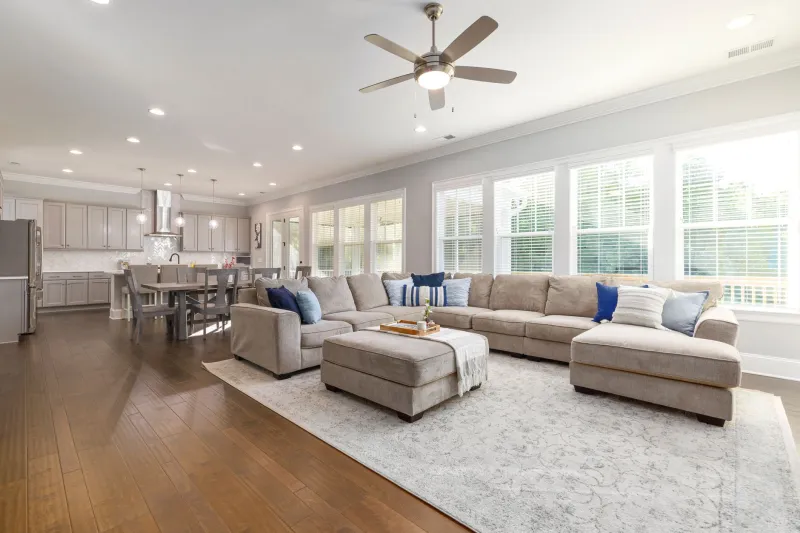
A living room, for instance, might feature a well-constructed sofa in a neutral fabric as its centerpiece investment, flanked by accent chairs sourced at a lower price point and finished with decorative accessories that add personality without significant cost. This approach allows a designer to present a cohesive, elevated space while keeping the overall budget in check.
The same logic applies to commercial environments. A restaurant might prioritize durable, commercial-grade seating at dining tables—where wear is highest—while selecting more economical options for waiting areas or decorative vignettes that see lighter traffic.
Build Supplier Relationships That Pay Dividends
One-time purchasing is rarely the most efficient model for working designers or business owners who furnish spaces regularly. Cultivating ongoing relationships with reliable suppliers creates advantages that compound over time: access to new inventory before it reaches the general market, priority service during high-demand periods, and the kind of institutional knowledge that comes from a supplier who understands your aesthetic preferences and client base.
Traders Furniture was built on exactly this model. We serve designers, businesses, and individual consumers across the country, and we recognize that the most productive relationships are those built on transparency, consistent quality, and a genuine understanding of the challenges our clients face. Whether you are furnishing a single room or outfitting a commercial property, having a knowledgeable partner in your corner changes what is possible within your budget.
Final Thoughts
Furnishing beautifully on a budget is not about compromise—it is about knowledge. Understanding the sourcing landscape, leveraging timing, developing an eye for construction quality, and building the right supplier relationships transforms budget constraints from obstacles into creative parameters. The designers who thrive in this environment are those who treat procurement as a discipline unto itself, as worthy of attention and refinement as the aesthetic vision it supports.
If you are ready to explore what smarter sourcing looks like for your next project, Traders Furniture is here to help you navigate every step of the process.