Hold, Fix, or Move On: A Practical Decision Framework for Aging Furniture
Furniture rarely fails all at once. More often, it sends quiet signals — a wobbly leg here, a fraying cushion there, a finish that has lost its luster after years of daily use. The question most homeowners and facility managers face is not whether a piece has aged, but what to do about it. Repair it? Refinish it? Or let it go entirely?
The answer is rarely obvious, and acting on instinct alone can prove costly in either direction. Replacing a structurally sound piece prematurely wastes money. Pouring repair costs into furniture that is fundamentally compromised wastes even more. What follows is a grounded, practical framework for navigating those decisions — one informed by quality indicators, structural reality, and honest economics.
Start With a Structural Assessment
Before any cost calculation enters the picture, the first question is purely functional: is the piece structurally sound at its core?
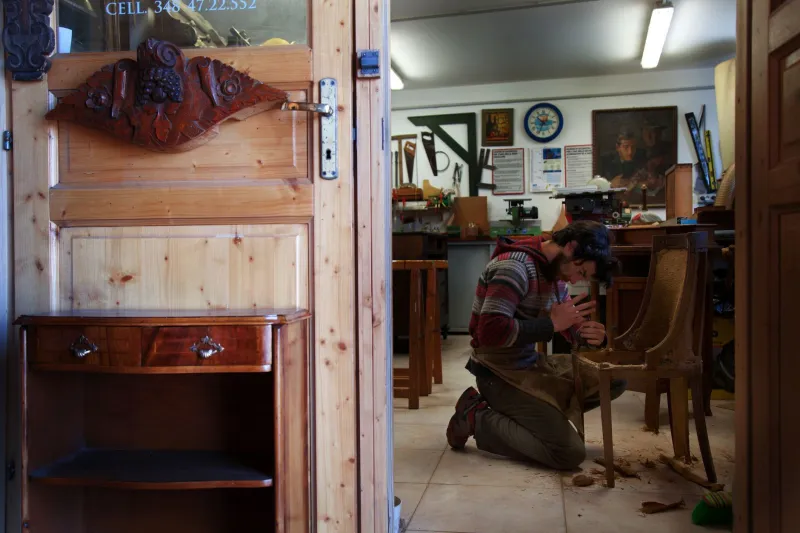
For seating — sofas, dining chairs, lounge chairs — press firmly on the frame at multiple points. Solid hardwood frames, such as those built from oak, ash, or maple, will feel rigid and unyielding. Softwood frames may flex slightly but should not creak or shift. If you detect lateral movement in the joints, that is a sign of failed adhesive or loose dowels, both of which are generally repairable by a skilled upholsterer or furniture technician.
For case goods — dressers, desks, credenzas, bookshelves — examine the joinery at corners and drawer slides. Dovetail joints and mortise-and-tenon construction are markers of quality manufacturing and typically respond well to repair. Stapled or glued particleboard construction, on the other hand, is far less forgiving once joints begin to fail.
If the structural core is intact, nearly everything else — fabric, finish, hardware, cushioning — is a surface condition that can be addressed. If the frame itself is compromised beyond practical repair, that changes the calculus entirely.
Understand the True Cost of Repair
Repair costs vary considerably depending on the type of furniture, the nature of the damage, and the professional involved. As a general benchmark, consider the following ranges common in the US market:
- Reupholstery of a standard sofa: $600–$1,500 depending on fabric choice and labor market
- Chair reupholstery: $150–$500 per piece
- Refinishing a hardwood dining table: $300–$800
- Structural joint repair on a chair or sofa frame: $75–$250 per joint
- Replacement of drawer slides or hardware: $50–$200
The economic break-even point — the threshold at which repair stops making financial sense — is typically reached when the cost of repair exceeds 50 to 60 percent of the replacement value of a comparable new piece. That said, this rule has meaningful exceptions.
Antique or heirloom furniture often carries sentimental or monetary value that justifies repair costs well beyond that threshold. Conversely, entry-level furniture purchased at a low price point may not warrant even modest repair investment if the underlying construction quality is poor.
The Refurbishment Middle Ground
Between a minor repair and a full replacement lies a productive middle territory: refurbishment. This approach is particularly well-suited to solid wood furniture and quality upholstered pieces that remain structurally sound but have suffered cosmetic decline.
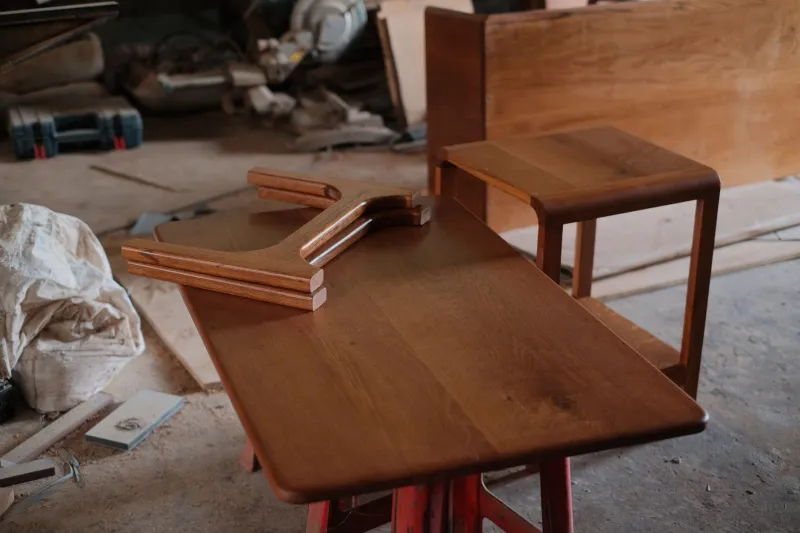
A dining table with deep scratches or a worn finish can often be sanded and refinished to near-original condition. A sofa with a dated fabric but excellent cushion support and a solid frame is an ideal candidate for reupholstery. Office chairs with worn armrests and faded upholstery can frequently be restored at a fraction of replacement cost.
Refurbishment also presents a design opportunity. Updating a piece's fabric, finish color, or hardware can allow it to align with a refreshed interior aesthetic without the full investment of replacement. For businesses managing large furniture inventories — offices, hospitality properties, multi-family developments — refurbishment programs can extend asset life by several years and deliver meaningful budget savings.
When Replacement Is the Right Call
Not every aging piece deserves a second life. There are circumstances where replacement is clearly the more prudent path.
Foam and cushioning degradation is one of the most common and least recoverable issues in upholstered seating. When seat cushions have permanently compressed and lost their resilience, the comfort and support function of the piece is fundamentally compromised. While foam replacement is possible, it is often cost-effective only when paired with full reupholstery on a high-quality frame.
Particleboard and MDF construction failures are similarly difficult to reverse. Once the substrate of a cabinet door swells from moisture or a particleboard shelf bows under load, the repair is rarely durable or aesthetically satisfying. In these cases, replacement with a better-constructed piece is the stronger long-term investment.
Safety concerns should always prompt immediate replacement. Furniture with broken legs, unstable bases, or exposed sharp components — particularly in homes with children or in commercial environments — presents liability and safety risks that no repair economics can justify delaying.
Finally, if a piece simply no longer serves its intended function — a desk that no longer accommodates modern technology needs, a dining set too small for a growing household — replacement aligned with current requirements is a legitimate and practical choice.
Category-Specific Guidance
Different furniture categories have different lifespans and repair profiles. Here is a quick-reference breakdown:
Upholstered seating (sofas, sectionals, lounge chairs): High-quality pieces with hardwood frames can last 15–25 years with proper care. Reupholstery every 8–12 years is standard for premium pieces. Budget-tier pieces with softwood or engineered wood frames have a practical lifespan of 5–8 years.
Dining tables and chairs: Solid hardwood tables, when properly maintained, can last generations. Refinishing every 10–15 years is reasonable. Chairs with upholstered seats may require fabric refreshes every 5–7 years.
Bedroom furniture: Solid wood dressers, beds, and nightstands are among the most durable furniture investments. Hardware replacement and refinishing can extend their life almost indefinitely.
Commercial and office furniture: Task chairs typically have a useful life of 5–10 years depending on usage intensity. Desks and storage units, if constructed from commercial-grade materials, can serve 10–15 years with minimal maintenance.
Making the Decision With Confidence
The most useful lens for this decision is not sentiment, and it is not frugality alone — it is informed judgment. Ask three questions of any aging piece: Is the structure sound? Does the repair or refurbishment cost fall within a reasonable percentage of replacement value? And will the piece continue to serve its functional and aesthetic purpose once restored?
If the answers are yes, repair or refurbishment is almost always the wiser investment. If any of those answers is no, a thoughtful replacement — one chosen with the same care and quality awareness — will serve you better over time.
At Traders Furniture, we work with homeowners, interior designers, and commercial buyers who face exactly these decisions. Whether the right path leads to a strategic replacement or simply a better understanding of what you already own, quality should remain the constant in every calculation.